

Got a solar quote? Get it checked before you sign.

Send us one installer's quote and WattWise reviews it line by line — cost per watt, cost per expected kWh, total paid over the full term, and what happens if the installer goes out of business. Written review by email within 24 hours. And when a quote is fair, we say so.

No quote yet? Run the free 60-second estimate first. No sales call. No savings promises.

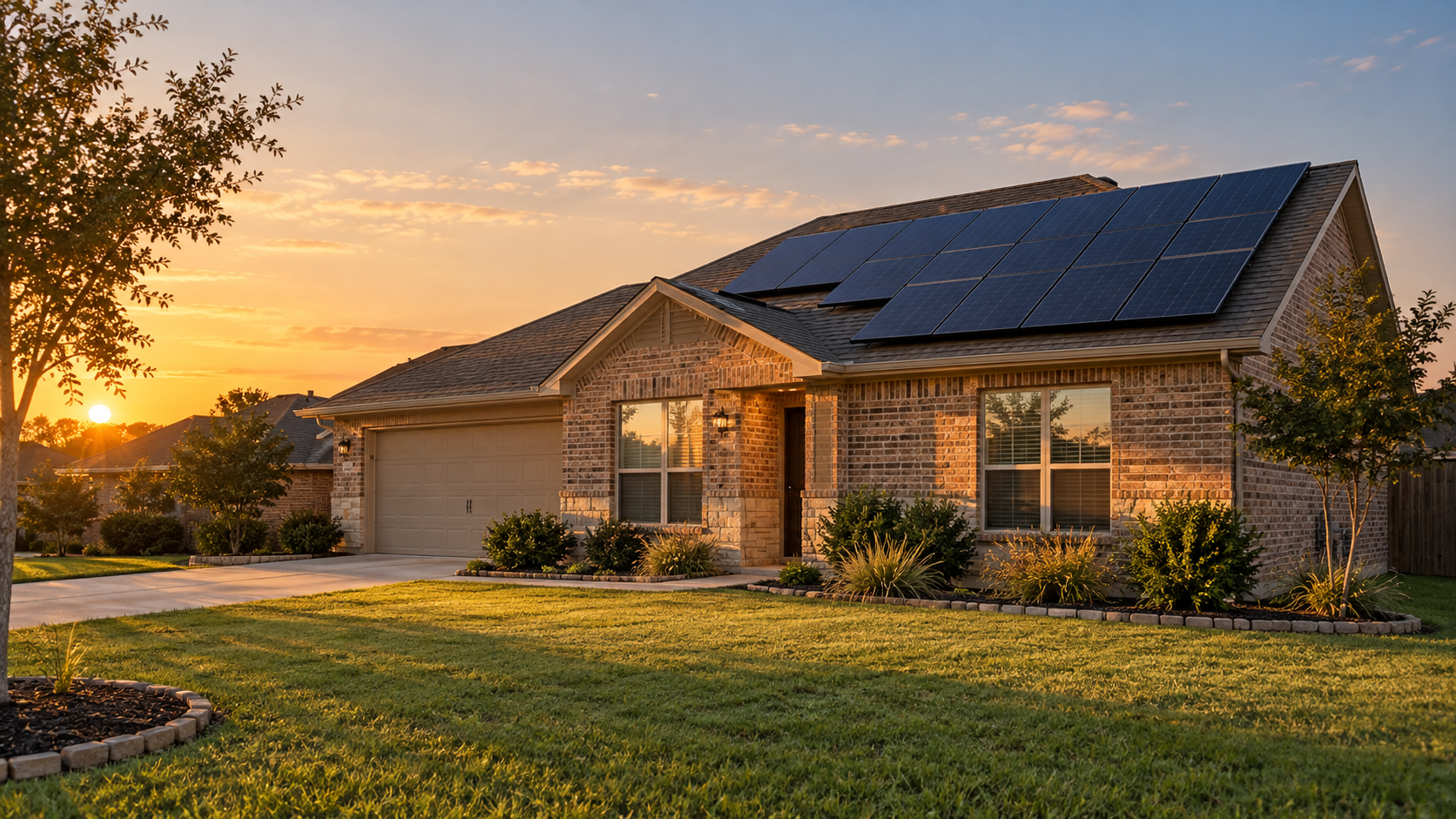
A Texas home with rooftop solar panels in the early evening
$149, flatOne quote, one written review. Paid by you, once — installers cannot pay to change a review.
Within 24 hoursYour Quote Check report arrives by email, with the math shown line by line.
Buy, lease, or skipEvery review puts the three options side by side — including "not yet," when that's the answer.

Marketplaces and installer platforms are paid when a homeowner signs; we're paid when you decide — including "no."

The 2026 change

The homeowner solar tax credit is gone. The federal residential clean energy credit (Section 25D) expired December 31, 2025. If you buy solar in 2026, there is no federal credit on your own taxes. (Source: IRS guidance on expiring energy credits, checked 2026-10-12.)

So the pitch changed. Leasing companies kept theirs — third-party owners can still claim the commercial credit (48E) on systems they own, though solar projects face a December 31, 2027 in-service deadline — so most sales pitches in 2026 are leases and PPAs. A lease can be a reasonable deal or an expensive one. Almost nobody reads the escalator clause, the total paid over 20–25 years, or what happens when you sell the house. That math is the product now.

Buy, lease, or skip — side by side. Every WattWise estimate and every Quote Check puts the three options next to each other: total cost over the full term, the utility-rate rise a lease needs before it beats paying the utility, and the two checks salespeople skip — what happens when you sell, and who fixes the system if the company dies.

What this means at your kitchen table: in 2026, the first question about any solar offer is no longer "how big is the credit?" It is "what do I pay in total, over the whole term, and who stands behind it?" The sections below walk through that math in order.

Quote Check — $149

You already have the quote. We check the math. Send us one installer's quote (PDF or clear photos). A person reviews it — this is not an automated scan — and emails you a written report within 24 hours covering:

Every Quote Check ends with one plain verdict, from a person — not a score from software:

Proceed Renegotiate Skip

Free automated quote analyzers exist, and they can flag a suspicious price. What they don't read is the escalator clause, the warranty backing, or what happens when you sell the house. A person reads your whole quote here — and when the honest verdict is "Skip," that is the verdict you get.

An installer's solar quote on a table with a calculator and a magnifying glass
  • Cost per watt, all-inThe quote's total divided by system size, compared against published 2026 price data (sources below).
  • Cost per expected kWhWhat the system is projected to produce vs. what you're paying for it.
  • Production checkWe run the same system through PVWatts, the free calculator from the National Laboratory of the Rockies, and print any gap between their estimate and the installer's. If there's a gap, you get the question to ask them.
  • Total paid over the full termFor loans and leases, every payment added up, including escalators.
  • Lease/PPA break-evenThe rate your utility would need to rise by each year for the lease to beat staying put. We show the math; we don't predict your utility's rates.
  • Warranty checkWhich coverage is backed by the manufacturer and which only by the installer, and what happens to each if the installer closes or you sell the house.

If the quote is fair, the report says so — and tells you to stop shopping. We are paid by you, flat, once. Installers cannot pay to change a review.

One quote, one written review, by email within 24 hours. Not a quote, not a promise of savings.

Want to see how it reads first? Ask for a free preview — we will send the first findings on your quote before you pay anything, so you can judge the review before you buy it.

Getting your quote to us: email it — the full PDF, or clear photos of every page — to chiticohq+wattwise@zohomail.com; send it before you pay for the free preview, or right after — either way we reply confirming it's in the queue, and your 24-hour clock runs from that confirmation.

Disclosure: We may earn a flat referral fee if you later ask us to introduce you to an installer. We never earn one from reviewing your quote.

Quote Check Pro — $249

Everything in Quote Check, plus three annexes for deals with more moving parts:

  • Lease/PPA lifetime-cost annexEvery payment over the full term, laid out using the disclosure fields in Colorado's SB 25-299 — so a lease offer shows its whole cost, not just its first-year payment.
  • Utility-tariff annexYour quote's assumptions checked against your utility's actual tariff — the rate, and how exported power is credited.
  • Sensitivity pageHow the verdict holds up if utility rates or production come in differently than the quote assumes.
$249

One quote, the full written review, and all three annexes — by email within 24 hours.

The free 60-second estimate

No quote yet? Start here. Six questions, about a minute:

  1. ZIP codeIdentifies your utility service area and local solar resource data.
  2. Utility companyPick your provider from the list for your ZIP.
  3. Average monthly electric billA range is fine; an exact amount isn't required.
  4. Roof situationOwn or rent, approximate roof age, and which way the largest roof section faces.
  5. Outage historyHow often your power goes out. This frames whether backup power deserves its own look.
  6. How long you expect to stay in this houseMoving soon changes the math more than almost anything else.

Your estimate appears on screen. The estimate is never behind an email form. Email is optional — it gets you the printed Home Energy Scorecard, a saved copy of your results, and an alert if your utility's rates or local programs change.

What the estimate doesn't do

It doesn't promise savings. It's an estimate built on stated assumptions, not a promise about your bill.

It doesn't pick an installer for you.

It doesn't trigger a sales call. Requesting quotes is a separate, optional step that requires your explicit permission.

Printed under every estimate This is an estimate, not a quote and not a promise. Real costs depend on your roof, your installer, and programs that can change. Get 2–3 real quotes before you sign anything.

How the estimate works

Every estimate shows its inputs, its sources, and the date each source was checked.

Your electricity rate

We use your utility's published residential rate. Rate data: U.S. Energy Information Administration (EIA) and the OpenEI Utility Rate Database, checked against your utility's own tariff sheet. For scale: the U.S. average residential rate was 18.31¢ per kWh in July 2026 (EIA, Electric Power Monthly). On this site, "high rate" means above that national average — and your own utility's number is always the one we use.

Your electricity use

Estimated from your bill range, or the usage figure you enter.

Your sunlight

Average peak sun hours for your ZIP, from PVWatts (National Laboratory of the Rockies).

Solar system cost

Published installed-price data, shown as two labelled series, never blended: Wood Mackenzie/SEIA turnkey installed prices averaged $3.21 per watt in Q1 2026 and $3.36 per watt in Q2 2026; EnergySage quoted prices had a median of $2.57 per watt in H1 2026. The two series measure different things — full turnkey installed price vs. marketplace quotes — so we keep them separate. Your roof and installer will move the real number, and Quote Check compares your quote against both series.

Available incentives

Checked in DSIRE (run by the N.C. Clean Energy Technology Center at NC State) and confirmed on each program's official page. Current status that applies everywhere: no federal credit for homeowner-owned systems in 2026 (25D expired December 31, 2025). State and local programs vary and change — we only show programs we verified, with the check date printed.

Batteries and generators

Priced separately, with their own ranges (below). We separate backup value from bill savings — including the cases where a battery doesn't make financial sense on savings alone.

Printed under every estimate This is an estimate, not a quote and not a promise. Real costs depend on your roof, your installer, and programs that can change. Get 2–3 real quotes before you sign anything.

Buy, lease, or skip — the comparison

Three honest answers, side by side. Which one fits depends on your rate, your roof, and how long you'll stay — not on which one a salesperson is paid to pitch this month.

Buying

Cash or loan — you own the system

You own the system and its warranties. In 2026 you also own the full price — no federal credit softens it.

Worth a closer look when your rate is high (above the national average, 18.31¢/kWh as of July 2026), your roof gets good sun, and you expect to stay long enough for the math to play out.

Less attractive when you rent, the roof is old or shaded, your rate is already low, or you may move within about two years.

Leasing / PPA

Someone else owns the system

You pay a monthly amount, often with a yearly escalator, for 20–25 years. Third-party owners can still claim a commercial credit on systems they own — which is why this is now the main pitch.

The questions that decide whether it's a reasonable deal: total paid over the full term; the escalator rate vs. your utility's actual rate history (we show history, labeled as history — not a prediction); what happens when you sell the house; and who maintains it if the leasing company fails.

Companies in this industry have failed — Sunnova and SunPower both went through bankruptcy — so the "who fixes it in year 8" question is not hypothetical.

The same ownership pattern applies to batteries: federal credit support for third-party-owned (TPO) battery systems runs through 2032, which is part of why battery leases are structured the way they are.

Skipping — for now

A real result, not a failure

Sometimes the honest answer is "not yet": a roof due for replacement, a planned move, a low rate.

Skipping is a result we print, not a failure. The estimate shows what would need to change for the answer to change.

And "not yet" costs nothing to hear — from us, or from any installer willing to say it.

Batteries and generators — the honest version

Home batteries

A single installed home battery runs roughly $8,000–$20,000 in published 2026 U.S. pricing (a Tesla Powerwall 3, about 13.5 kWh, is commonly $11,500–$15,000 installed).

Worth considering when your outages are frequent, your utility pays little for exported power, or time-of-use rates make stored power worth something beyond backup.

Honest warning: panels alone shut off during an outage — grid-tied systems are required to (anti-islanding). A battery is usually bought for backup and control, not because it pays for itself on bill savings alone.

Generators

A portable generator costs roughly $400–$2,500 for the unit; a whole-home standby generator, installed with a transfer switch, typically runs $9,500–$15,000.

Lower upfront cost than a battery, more hands-on: fuel, noise, maintenance.

Safety, plainly

Never run a generator indoors or in an attached garage — carbon monoxide kills. Never tie one into house wiring without a transfer switch installed by an electrician. (U.S. Consumer Product Safety Commission guidance.)

How we make money — in writing

  1. Quote Check Homeowners pay $149 for a quote review — Quote Check Pro, with the lease/PPA lifetime-cost annex, utility-tariff annex, and sensitivity page, is $249. Paid by you, once, flat.
  2. Installer quote requests Only if you choose to request quotes — a separate step, never triggered by the estimate. You pick installers by name, and you pick how they may contact you: email, text, or call. Installers pay us a flat fee per request — never a percentage of anything you sign. We're paid the same whether you sign or walk away.
  3. Affiliate links Some hardware links are affiliate links, labeled as such. If you buy through one, we may receive a commission at no additional cost to you.

What never changes: who pays us never changes which options we show, which assumptions we use, or what a Quote Check concludes. When the math says "not yet," we print "not yet."

Privacy, in plain words

Your email stays with us — it's how we send your estimate, scorecard, and follow-ups. Your phone number goes only to installers you pick by name, only after you ask for quotes in the separate request step, because those installers pay us for that request. We don't sell your information to call centers, and the estimate never triggers a sales call.

Questions, answered straight

Is the estimate really free? What's the catch?

Yes. The estimate, the Scorecard, and the comparison content are free. We make money from Quote Check ($149, or $249 for Pro), from flat fees when you choose to request installer quotes, and from labeled affiliate links. You never have to do any of those to use the estimate.

Will a salesperson call me after the estimate?

No. The estimate doesn't trigger calls. Installer contact happens only in the separate quote-request step, only with installers you pick by name, and only through the channel you choose.

What happened to the 30% federal solar tax credit?

It expired for homeowners on December 31, 2025. In 2026, if a salesperson builds a "federal credit" into a quote for a system you'd own, ask them which credit they mean and get it in writing. Leasing companies can still claim a commercial credit on systems they own — that's part of why leases are the main pitch now, and part of what Quote Check examines.

Lease or buy — which is better?

Neither, in general. It depends on your rate, the lease's escalator, the total paid over the term, and how long you'll stay. Any page or person who answers without your numbers is guessing. Our estimate and Quote Check both put buy and lease side by side so you can compare totals, not monthly payments.

Are your numbers real?

Every market figure on this page carries a named source and a check date (see Sources); the battery and generator price ranges come from 2026 U.S. pricing guides, cross-checked 2026-10-12. The estimate uses your inputs and published data. It still can't see your roof, your shading, or your installer's overhead. Use it as a starting point, then compare it with 2–3 real quotes — or send us one for a Quote Check.

Why should I trust WattWise over an installer?

Don't take either on trust. We show the inputs, the sources, and the math so you can check them. We also publish the cases where the answer is "not yet." An installer who won't show cost per watt, total paid over the term, and warranty backing in writing is telling you something.

Do you only cover solar?

No. We compare solar, batteries, and generators — and "nothing yet" is a legitimate result. If your real problem is outages, the cheapest honest answer might be a portable generator, with the safety rules printed next to it.

Sources

Checked 2026-10-12.

  • U.S. average residential electricity rate: 18.31¢/kWh, July 2026 — EIA, Electric Power Monthly.
  • Utility rates by provider: EIA data and the OpenEI Utility Rate Database (each verified against the utility's own tariff sheet before use in an estimate).
  • Sunlight/production estimates: PVWatts, National Laboratory of the Rockies (formerly NREL).
  • Installed solar price — two series, labelled, never blended: Wood Mackenzie / SEIA turnkey installed — $3.21/W in Q1 2026 and $3.36/W in Q2 2026. EnergySage quoted median — $2.57/W, H1 2026.
  • Federal homeowner credit (25D): expired December 31, 2025 — IRS guidance on expiring credits. Third-party-owner credit (48E) per IRS/OBBB summaries. Federal credit support for third-party-owned battery systems runs through 2032.
  • Lease/PPA lifetime-cost annex fields (Quote Check Pro): Colorado SB 25-299 disclosure requirements.
  • Incentive programs: DSIRE (N.C. Clean Energy Technology Center, NC State), confirmed on official program pages.
  • Home battery installed range: $8,000–$20,000 single unit, 2026 U.S. pricing guides.
  • Generator pricing: portable units $400–$2,500; whole-home standby installed $9,500–$15,000, 2026 U.S. pricing guides. Safety: U.S. Consumer Product Safety Commission generator guidance.